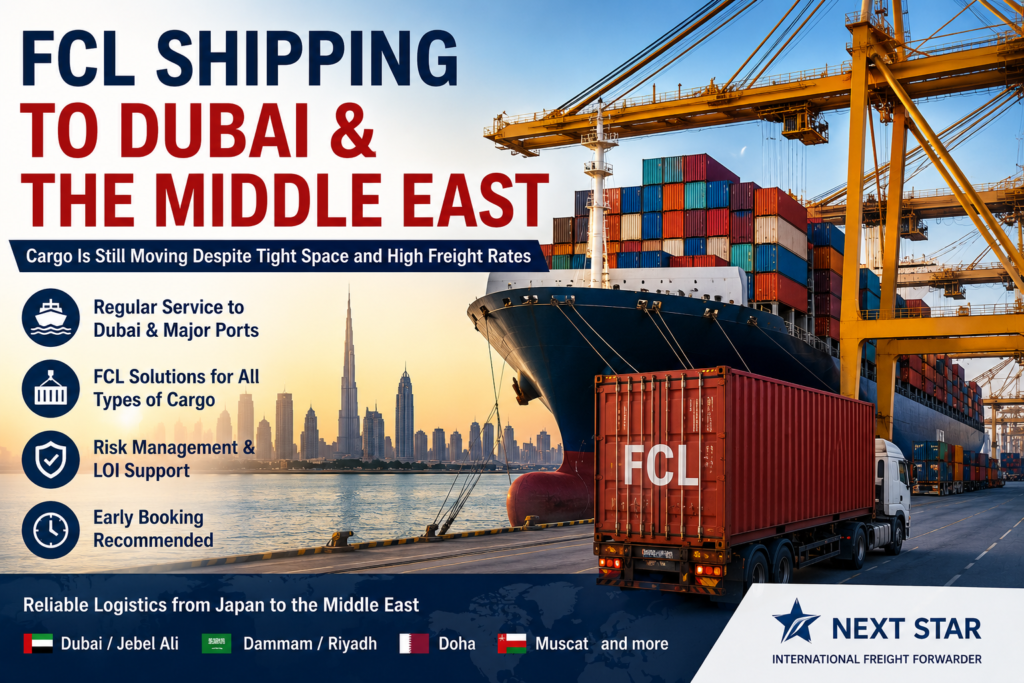
The Middle East remains one of the most important markets for Japanese exporters, particularly for machinery, industrial equipment, construction materials, automotive parts, and project cargo.
However, since the escalation of tensions involving Iran and the United States, shipping conditions to the Gulf region have become more challenging than in previous years.
While concerns about regional stability continue, one important fact remains:
Cargo is still moving.
The challenge today is not whether shipments can move, but how to secure space, manage risks, and plan transportation effectively.
Current Situation for Middle East FCL Shipments
Based on current market conditions, FCL shipments to Dubai and other Middle Eastern destinations are experiencing:
- Tight vessel space
- Elevated ocean freight rates
- Frequent schedule adjustments
- Short validity periods for quotations
- Additional risk assessments by carriers
- Longer booking lead times
Despite these challenges, carriers continue to provide regular services to the region.
For exporters, early planning and flexibility have become more important than ever.
Dubai Remains the Logistics Gateway to the Middle East
Dubai, particularly Jebel Ali Port, continues to serve as the primary logistics hub for the Middle East.
Many shipments destined for:
- Saudi Arabia
- Qatar
- Oman
- Kuwait
- Bahrain
- East Africa
are routed through Dubai for distribution and re-export.
As a result, Dubai remains a strategic gateway for companies expanding into the region.
Impact of Regional Tensions on Shipping
Following increased tensions involving Iran and the United States, shipping lines have adopted more cautious risk management measures.
The Strait of Hormuz remains one of the world’s most important maritime chokepoints, and any disruption in the region can influence:
- Shipping schedules
- Insurance costs
- Freight rates
- Vessel routing decisions
- Capacity availability
Although most services continue to operate, carriers are carefully monitoring developments and adjusting their operations when necessary.
LOI Requirements Are Becoming More Common
One notable trend in recent shipments is the increased use of LOIs (Letters of Indemnity).
Depending on the cargo, destination, carrier, and routing, shippers may be asked to provide additional declarations acknowledging potential risks associated with transportation.
In some cases, carriers request LOIs relating to:
- Regional security concerns
- Possible delays
- Route deviations
- Additional operational risks
This does not mean cargo cannot move.
Instead, it reflects the reality that carriers are implementing additional documentation requirements while continuing to accept bookings.
Understanding these requirements early can help avoid delays during the booking process.
Tight Space Does Not Mean No Space
A common misconception is that tight capacity means shipments are impossible.
In reality, cargo continues to move every week.
However, exporters should be prepared for:
- Limited vessel options
- Higher freight rates
- Earlier booking deadlines
- Potential schedule changes
For urgent projects, waiting until the last minute may significantly reduce available options.
Why Early Planning Is Critical
For project cargo, machinery, exhibition cargo, and industrial equipment, transportation planning should begin as early as possible.
Factors to consider include:
- Vessel availability
- Equipment availability
- Freight validity
- Carrier acceptance conditions
- LOI requirements
- Transit time expectations
- Destination delivery schedules
Companies that plan early generally have access to more routing options and more competitive freight levels.
Next Star’s Middle East FCL Services
Next Star provides comprehensive FCL shipping solutions from Japan to the Middle East.
Main destinations include:
- Dubai / Jebel Ali
- Abu Dhabi
- Dammam
- Riyadh
- Jeddah
- Doha
- Muscat
- Kuwait
- Bahrain
Our services include:
- FCL transportation (20FT / 40FT / 40HQ)
- EXW, FCA, FOB, CFR, CIF, DAP arrangements
- Inland trucking
- Export customs clearance
- Carrier booking management
- Documentation support
- Project cargo coordination
- Heavy cargo handling
- Flat Rack and Open Top solutions
Conclusion
The current Middle East shipping market is undoubtedly more challenging than in the past.
Freight rates remain high, vessel space is tight, and carriers may request additional documentation such as LOIs.
However, shipments are continuing to move, and successful transportation depends on securing reliable routing, understanding carrier requirements, and planning ahead.
At Next Star, we support exporters with practical and up-to-date logistics solutions for Dubai and the wider Middle East region.
If you are planning an FCL shipment to the Middle East, contact us to discuss the most suitable transportation options for your cargo.